Wyrming the town of High Wycombe
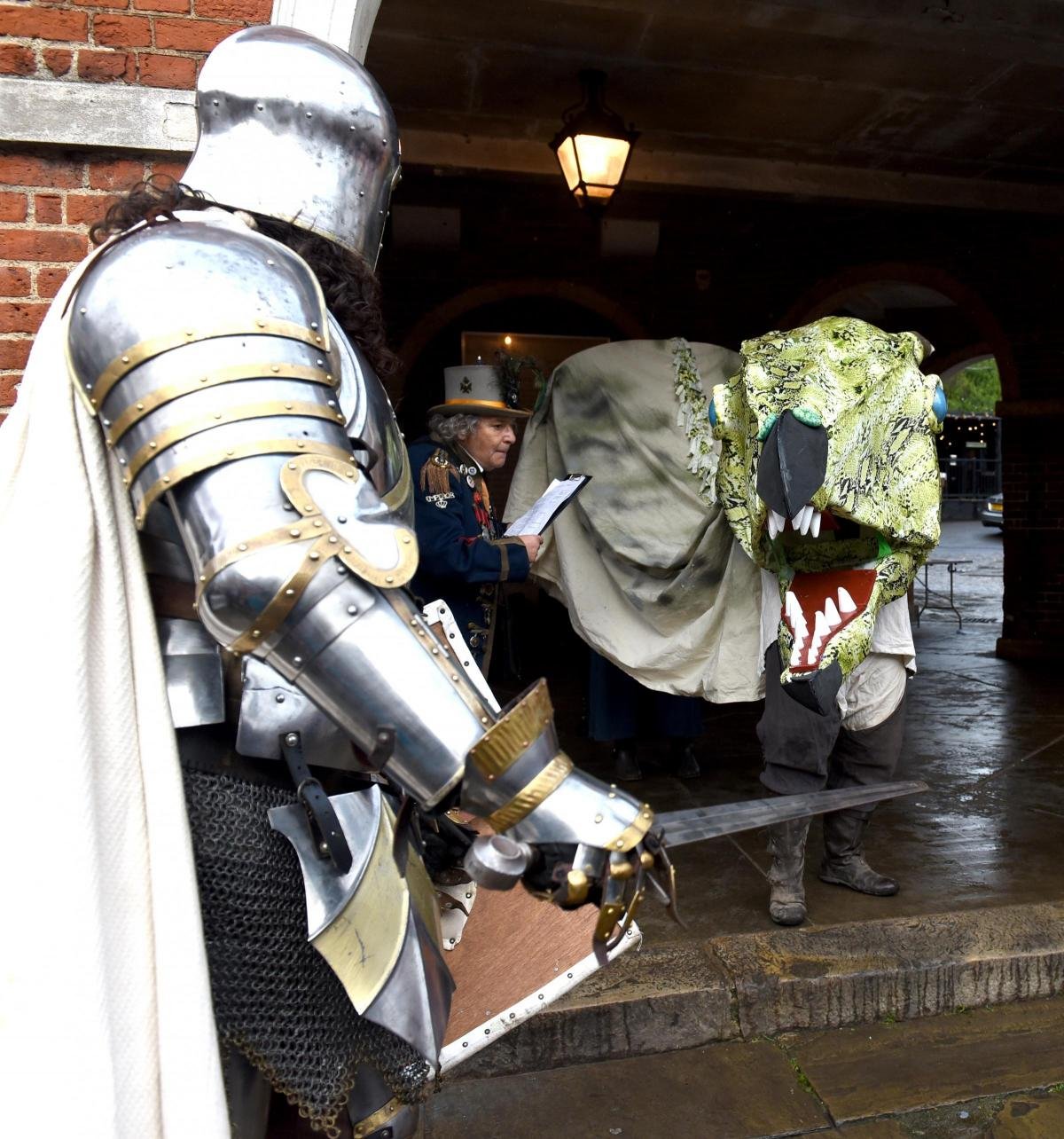
On February 1st 2026, the Buckinghamshire town of High Wycombe hosted the first Wyrd Wycombe Festival. The event was themed around local folklore and the highlight was a battle between a sheep-gobbling dragon and an armoured knight. The day was a big success and there are already calls for this to become an annual event.
I co-created this festival with an old friend, photographer and local historian Mark Page. We wanted to do this because, despite being the most populous town in Bucks, Wycombe – as the locals call it - has no annual celebration day. Padstow has its Obby Oss, Hastings has its Jack in the Green, Bungay has Black Shuck but Wycombe was bereft. Admittedly it does have a unique ceremony every May where the outgoing mayor is weighed in public on a giant set of golden scales to make sure that they haven’t got fat on the public purse. However, the ceremony also involves weighing the incoming mayor and around 50 other local dignitaries and there’s little for the audience to do other than cheer, or boo on the rare occasion that someone hasn’t dieted throughout April.
So we began digging through old books, magazines and journals and soon came across a pamphlet written in 1985 by a chap called Clive Harper. Back in the eighties, Clive was part of a group called Strange Wycombe that investigated local myths and legends, and he and friend Alan Cleaver had uncovered a 16th century dragon story that had been largely forgotten. This was just what we were looking for.
What they had found was a letter in the October 1758 edition of The Gentlemen’s Magazine written by one Edgar Bochart. He had been visiting Wycombe and had heard the story of an incident involving a large ‘water serpent’. Curiosity piqued, he sought out a farmhouse where he was told that the incident was depicted on a wall mural. The farm was the last remnants of a former grand house and estate in Hughenden, a parish on the edge of Wycombe, and, sure enough, on one of its walls he found a painting of a dragon-like creature and a pencilled record of its history. The story, which he felt ‘in every respect true’, is as follows:
‘In the year 1578, a servant woman was troubled by a large water serpent which she frequently saw when she went to get water. She was frightened of the creature and told her neighbours about it. A plan was then agreed to do away with the serpent. The woman was to attract the serpent by sitting by the pond side, whilst some of her neighbours hid behind the briars which almost surrounded the pond, ready to kill the creature. The plan was successful and to mark the event the skin of the creature was stuffed with straw and hung up outside the house. Over the years the skin rotted and so a likeness of the creature was painted on a wall of the farm. ‘
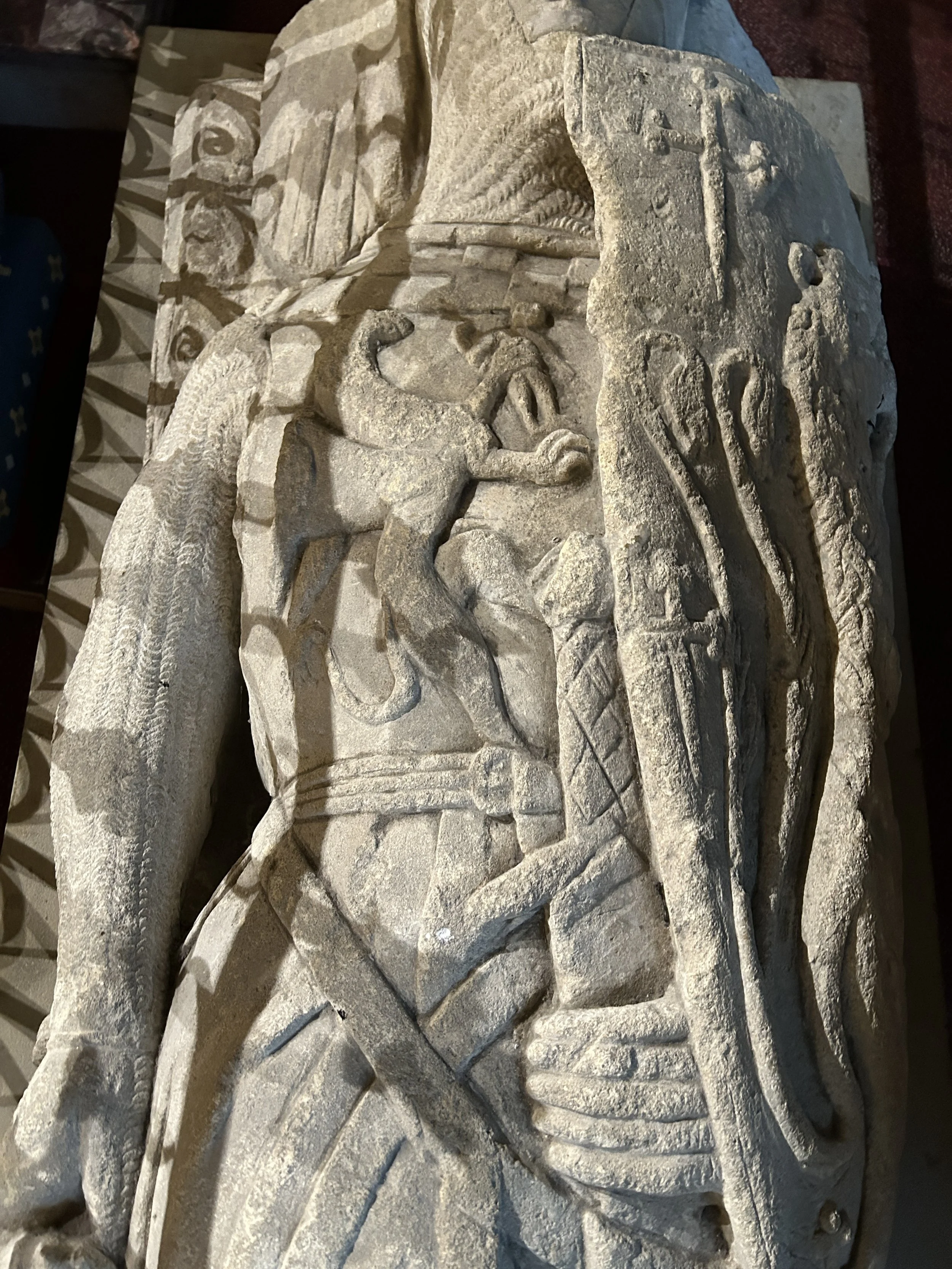
We also discovered that the tale had been perpetuated in the 18th century by a local well-to-do family called the Wellesbournes who claimed that one of their ancestors had slain the dragon. They had even gone so far as to have stone effigies carved of their illustrious forbears, all wearing the symbol of the dragon on their armour. These now rest in a small room at the church of St Michael and All Angels in Hughenden.
This was just too good a story to ignore. So we re-badged the dragon as the Wycombe Wyrm, using the old Germanic name for a wingless dragon - the alliteration was just too perfect to ignore! Then we built an eight metre long dragon and found a two metre tall John Snow look-alike called Toby who owned a full set of metal armour. Pitting them against each other in the High Street provided quite a spectacle and we supported this with an art exhibition based on local folklore, a performance by New Moon Morris, live music and street art. The feedback we received was so overwhelmingly positive that we’ve agreed to do it again next year. Wycombe now has a new tradition based on old stories.
We learned some valuable lessons while getting this event off the ground and I thought it might be useful to share them.
Firstly, try to avoid public funding if you can. There are a great many services that desperately need money spent on them and you will open yourself up to moans of ‘money being wasted.’ Look for arts-based funding or sponsorship from local businesses. Or use crowdfunding. We created a commemorative coin for the event and pre-orders paid for the coins and the entertainers. You can also save money by making props and costumes. Folk events were traditionally created by some of the poorest in society and things that look folksie and homemade just add to the charm. Our dragon was made of donated fabrics and plumbing pipe gathered from skips.
Secondly, keep it local. Folk events are created by the people for the people. Make sure that what you’re celebrating is something that the community cares about - history, heritage, folklore. Make it fun, free and welcoming - folk culture is all about bringing people together whatever their background, age, gender, belief or socio-economic status.
Thirdly, there’s no such thing as too much marketing. We posted to local Facebook groups several times a day for weeks beforehand but we still had people saying that they didn’t know about it. Use every method open to you - social media, local papers, newsletters – and get local businesses involved. We had pubs offering dragon’s breath cocktails and cafes baking red hot chilli pizzas and cup cakes. They will also help to publicise the event if it increases footfall. We had one local eaterie tell us it was the busiest day they’d ever had.
Lastly, plan ahead! We’re already booking morris sides and musicians for February 2027 and thinking how we can go bigger and better next year. The Wycombe Wyrm will rise again!
You can watch a short video of the day here. And folklorist Deborah Hyde made an excellent documentary on the Wycombe Wyrm that you can watch here.
You can also buy some lovely merchandise inclusing t-hirts, lapel pins, fridge mahnets, woven patches etc. on the Wyrd Wycombe website - see here.
All proceeds go towards funding the event.