Grayson and the Monster Zoo
During the pandemic, I had few demands on my time. I had no work and my children have all left home and have kids of their own. However, it was during video calls with them that I started to realise how difficult things were for families at this time. They were all cooped up together in one house. Mum and Dad were trying to work from home, often without a dedicated space to do so. The children were also having to be home schooled, which loaded extra pressure onto the grown ups. And without the freedom to visit their friends’ houses, children were often sitting in front of screens alone for hours. I heard similar stories from dog walkers who were parents of school-aged children and I began to wonder if I could do something to ease the burden. Then I had a sudden flash of inspiration. What if I used folk art i.e. art made by an ordinary person outside of the gallery system?
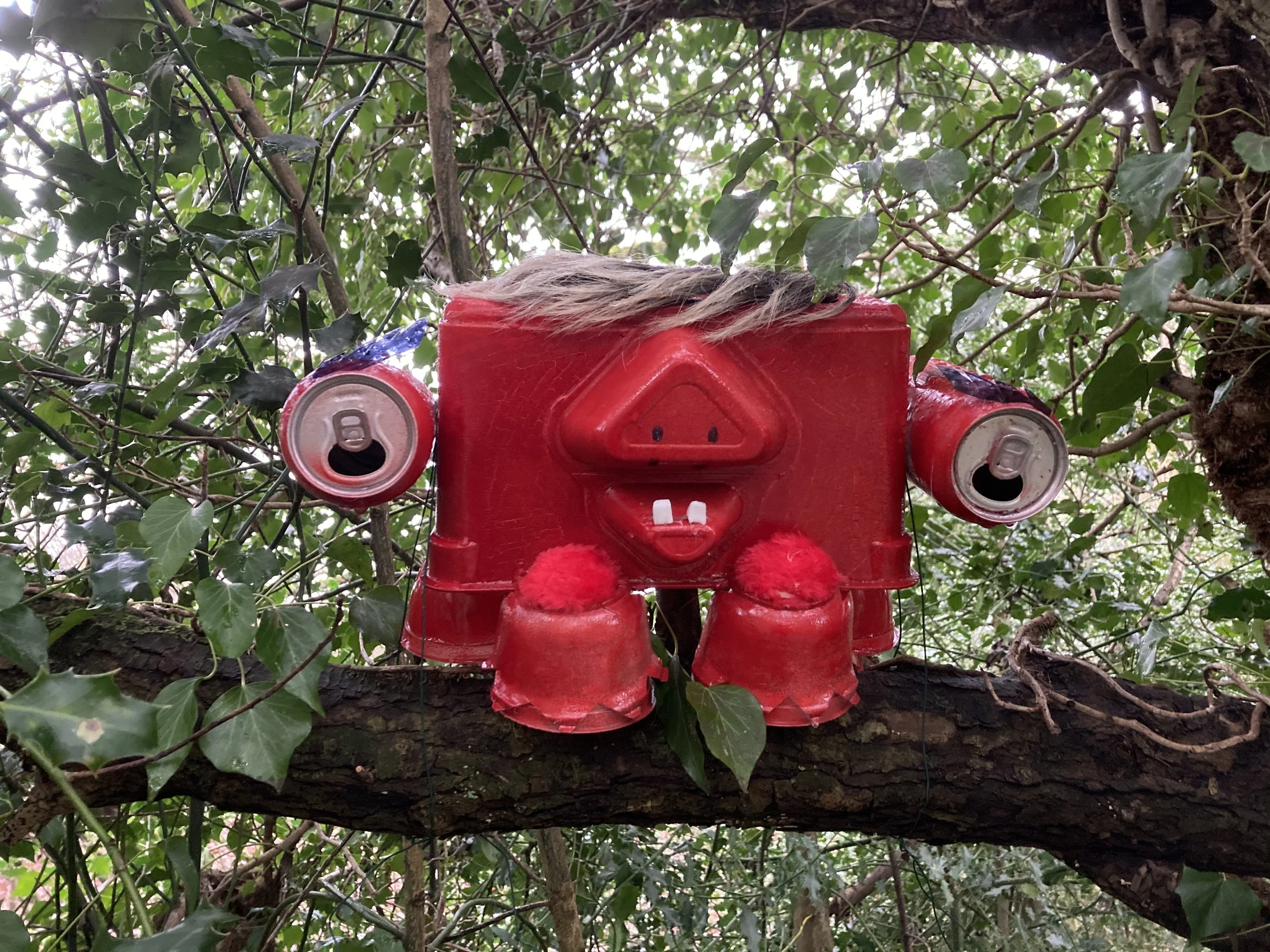
I had no budget but, like most households, I had junk I could upcycle. My bins contained plastic and cardboard packaging, and my garage stored broken appliances, bits of old wood and other rubbish that ‘might come in handy one day’ but never had. These became my resources and I used them to make some monsters. In just a few days, I had half a dozen, all made from hand sanitiser bottles, cardboard and plastic packaging, moth-eaten teddy bears and all sorts of other disposable rubbish. I gave them a lick of paint and a coat of varnish to protect them from the elements and then hid them (but not too well) in some local public woodland near my house. Had I lived in a town or city I could just as easily have used a public park – the point was to let people find the monsters.
Then I waited.
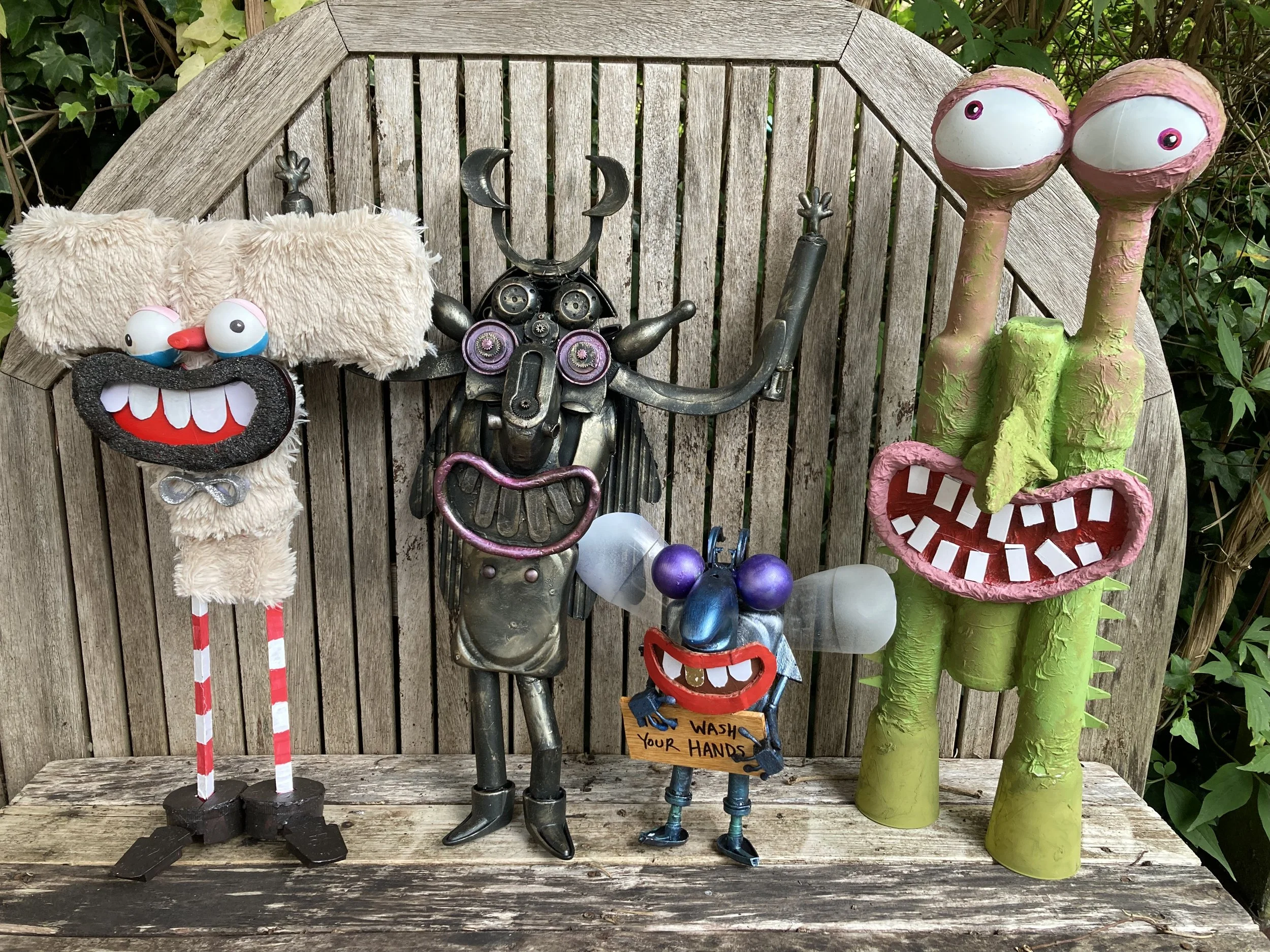
Some of my rubbish monsters
Do you remember all those games of hide and seek you played as a child? You might have got involved in treasure hunts and paper chases too. Or perhaps you enjoyed ‘spot the difference’ puzzles or books like Martin Handford’s Where’s Wally? series (Or Waldo if you’re American, or Yonu, Willie, Jura, Holger, Vallu, Ubaldo, Charlie, Gile or Valdik depending where else you are in the world).
How good did it feel when you found who/what you were looking for?
Children love the challenge of finding things and the biggest rewards come when they’ve had to search for them. It taps into the most ancient parts of our brains – maybe it’s a deep human memory from our hunter-gatherer past - and the ‘thrill of the hunt’ is just as popular now as it’s always been. And not just with children. In towns near me there are fans of app-based games like Pokémon GO who meet up at weekends to go hunting together.
Collectors also tend to be completists. When I was a kid the I-Spy books were very popular. Each one covered a different subject, such as I-Spy on a Train Journey, or I-Spy at the Seaside. As we spotted the items catalogued in each book, we ticked them off and got points. Then, once the books were completed, we sent them off to someone called ‘Big Chief I-SPY’ - a former headmaster called Charles Warrell who lived to the extraordinary age of 106 - and got a badge of merit in return.
At the height of the craze during the Sixties and Seventies, pretty much every kid I knew was trying to complete a book or two. They’re still being published to this day. However, I can’t begin to tell you the frustration I suffered because, even though I lived in the countryside, I was never able to complete I-Spy on the Farm. That’s because one of the items I had to find was a crop-spraying autogyro. Okay, so the book said ‘helicopter’ which did improve my chances. But I’m now 65 years old at time of publication and I still haven’t seen a bloody helicopter of any kind on a farm. And, ridiculously, it still bugs me that I can’t complete the book.
Yes, I still have it. Just in case.
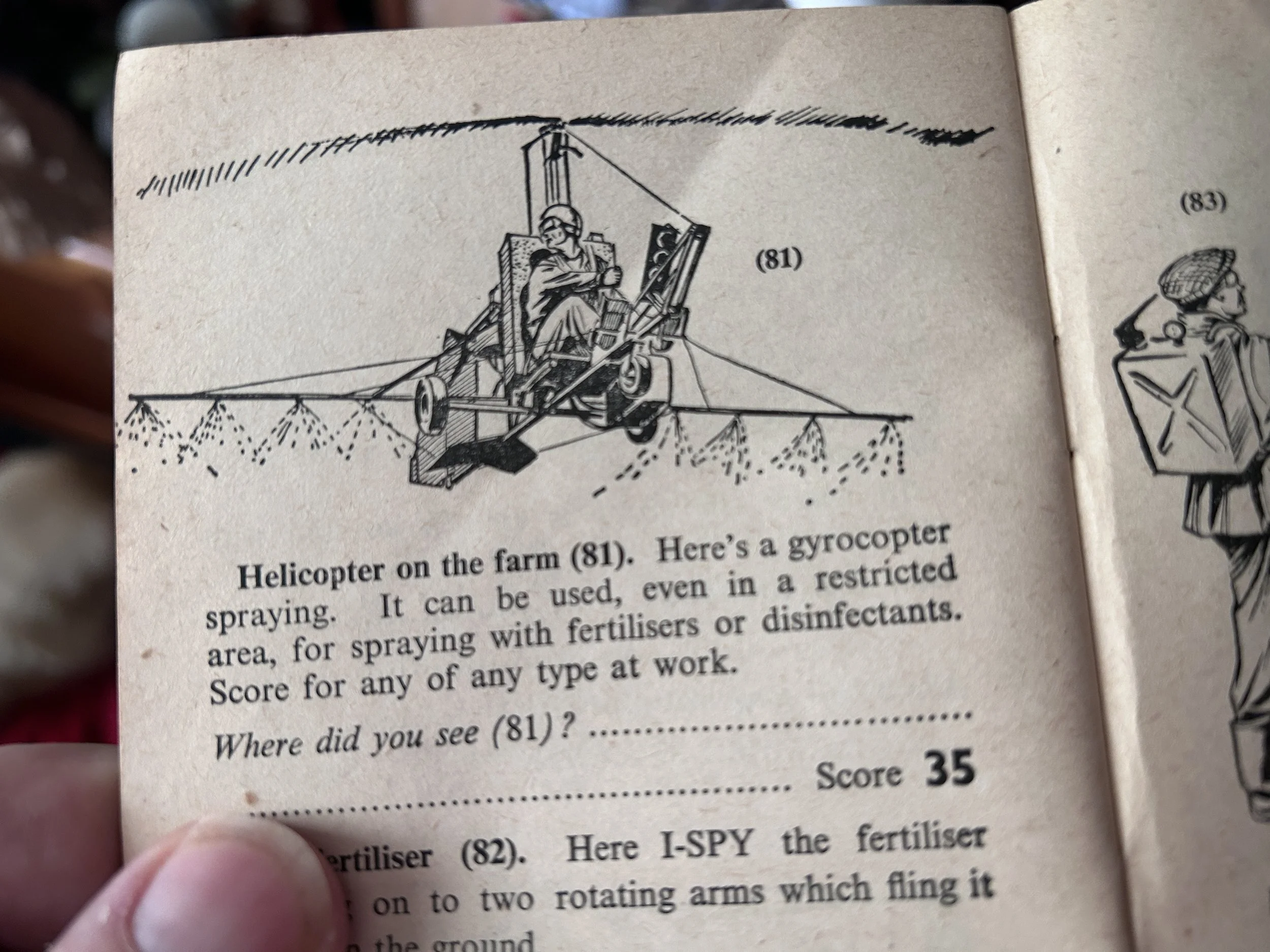
Bloody farm helicopter …
That frustration is powerful. It makes people work all the harder to complete a set. You’ll know this if you’ve ever had to collect all the stickers for a Panini football album, or if you’ve ever stood on a station platform in the rain to see that one locomotive that will complete the set. I was therefore pretty confident that once kids started to find the monsters, chances were that they’d want to find them all.
It only took a day before the first monster sightings started to appear on local Facebook pages. I then asked a friend, photographer Chris Rowan, to post some images online and to ask, ‘I wonder where they came from?’ and ‘I wonder how many there are?’
Social media was soon a-buzz and speculation was rife about who the anonymous monster maker was. The local Bucks Free Press newspaper ran a story on it. But, most importantly, local children were now insisting on going monster hunting in the fresh air and were dragging their parents along with them. And, of course, they wanted to find them all. I then nudged the project further along by suggesting that kids make their own monsters and add them to the collection.
Soon there were twenty monsters. Then thirty. Then fifty. They hung from branches and hid in hollow tree trunks. They lurked among the bushes and shrubs and, worryingly, at the tops of trees. I checked the area during my daily dog walks and photographed each new creature as it appeared. Every day the area rang with the sound of excited children on the hunt. It was an utter joy to hear.
The reason I chose monsters, incidentally, is that they appeal equally to boys and girls and anyone of any age or level of ability can make one. Like art itself, no one can ever say that a monster is ‘wrong’ or ‘bad’ because every creature is as valid as any other – much like art itself. All you need is imagination and some garbage to work with. I knew that many families don’t have access to art materials or can’t afford them. But everyone has a dustbin.
As the weeks passed, the tally of monsters continued to grow and soon passed eighty, ninety, a hundred, and I couldn’t help noticing, to my delight, that some had clearly been made by the mums and dads – they were getting engaged in art too. However, the hugely increased footfall of monster hunters (plus bouts of heavy rain and then snow) soon turned the area into a quagmire of sticky mud. And as the number of visitors increased, so did the breaches of lockdown regulations - families were travelling in from other towns in direct defiance of the government’s ‘essential journeys only’ policy. So it was no surprise when the Trust that manages the land requested that the person behind the scheme come forward. The monsters needed to be removed.
To be fair, the Trust people were very complimentary and even apologetic when I spoke to them. They loved the fact that people were enjoying the area more than ever before and they hated to be killjoys but the project had become a victim of its own success. I knew it would be popular but I hadn’t anticipated that, in the absence of other social activities, it would be quite so popular. However, this wasn’t the end of the story.
A couple called Andy and Melanie James, who ran a farm just 10 minutes walk from where the monsters had been, came to the rescue and offered us a new home for free. The site was bigger and more open – we had a whole field to ourselves - and had the bonus of animals in the neighbouring fields that would provide additional entertainment for visitors.
The Monster Zoo was born. And it was a monster success.
Hundreds of people visited every week and, at the weekends, there could sometimes be over 500 visitors through the gate. Thankfully, they were staggered throughout the two days, usually in family groups of 3-5 people, and the open air site was big enough to allow for social distancing. People regularly brought along new monsters to swell the number of exhibits and we soon passed 200 monsters. Then 300. At its peak the Zoo had approaching 500 exhibits. Things got so busy at weekends that Andy, Mel and the farm staff put on an open-air tuck shop and served teas, coffees and cold drinks – while abiding by the appropriate Covid regulations of course. It also gave them an opportunity to sell their free-range fresh farm produce direct to the public. It had become a true local folk event – created by the people for the people – and everyone was happy.
And then the Zoo caught the attention of Grayson and Philippa Perry.
I’ve read a number of articles in which people have explained how art had helped them to get through difficult times. For example, journalist Fanny Johnstone replaced her smartphone addiction with sketching. She said that losing herself in the act of drawing helped her to become a happier and more patient person. Plus, it created a physical record of a time and place that she could look back on in years to come, like a visual diary of her feelings.
The Perrys believed in the healing power of art too and this had resulted in Channel 4 commissioning them to make three series of a show called Grayson’s Art Club during the pandemic. The show encouraged us, the British public, to make art as a form of relaxation and therapy and to send in our artwork. Some would then be selected to be shown on TV and then feature in an exhibition in an actual gallery once the pandemic was over . It was a wonderful show and we got to see lots of fresh, funny and emotional work created by first-time artists, untutored and self-taught. Folk Art, in other words.
The show was getting nearly 20,000 submissions per series so it was a big deal to have the Monster Zoo featured. And I was invited to contribute an artwork to be displayed at Bristol Museum and Art Gallery in December 2021 as part of the Grayson’s Art Club (Series Two) public exhibition. However, it was the children who had made the Monster Zoo work and I wanted to celebrate all of the hard effort that they (and a few adults) had put in. And so the gallery obliged by organising a projected rolling slideshow of all 480+ monsters alongside one of my original creations. It meant that every single contributor was represented and the exhibition ran for a year. So now, all of those young monster makers can say that they’ve had their work displayed in a major UK art gallery, which can only help their self-esteem and maybe inspire them to do more.
The Monster Zoo encouraged people to ‘have a go’. It gave a second life to throwaway packaging and household refuse. It got people out into the fresh air and countryside and gave them some exercise. It allowed families to meet up in a safe environment. It got children off their screens and interacting with other kids. They also got to see farm animals living in green fields and free from cruelty, as all farm animals should. It inspired people to buy wholesome free-range farm produce rather than pre-packaged and factory-farmed supermarket goods. Many local people met for the first time and new friendships were forged. It was a true folk event; inclusive, hands-on, analogue and by the people for the people.
And it didn’t cost a single penny.
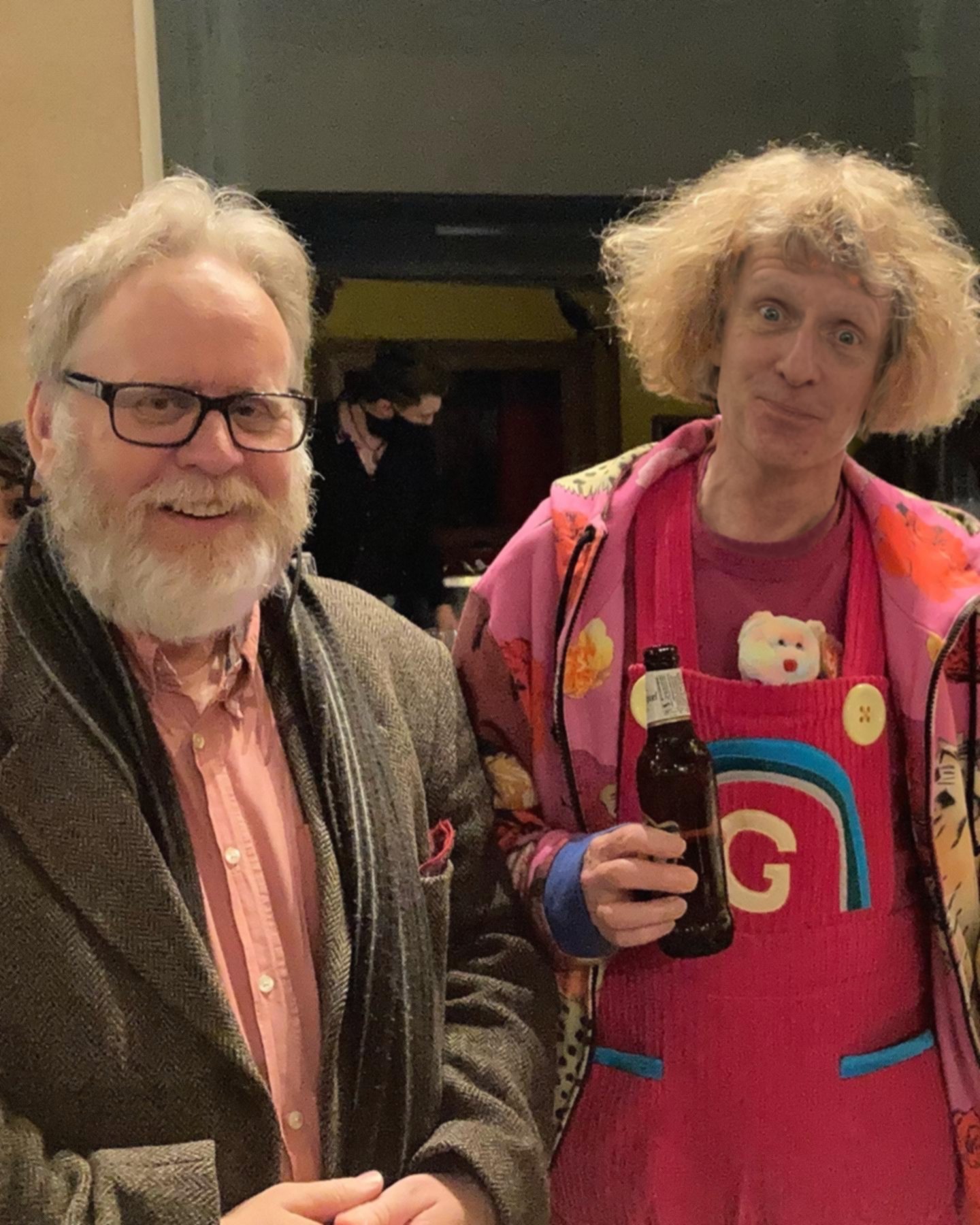
Apologies for my fulsome beard - I was playing Father Christmas at local primary schools at the time
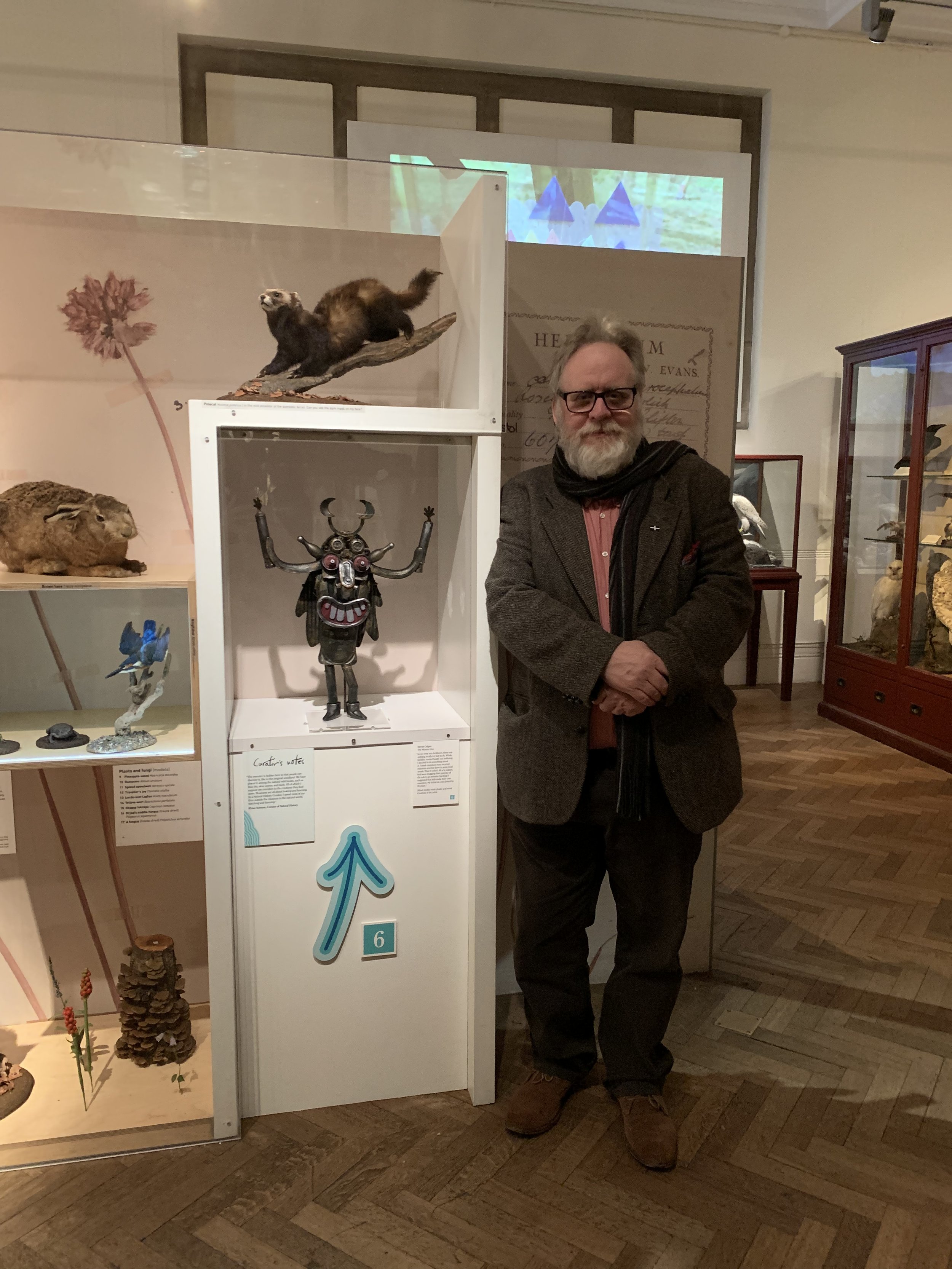
Bristol Museum and Art Gallery
You can take a visit to the Monster Zoo in its early days by watching this video on my YouTube channel.
And you can watch my conversation with Grayson on this video (at around the 2:15 mark).